
Shops and businesses in Diamniadio: a guide
Where to shop for food, clothes and hardware in Senegal's new town of Diamniadio: districts, FCFA budgets, practical tips and what the area still lacks.
Shops and businesses in Diamniadio: a practical guide
Diamniadio is a town under permanent construction, and its retail scene moves at the same pace: long-established neighbourhood shops strung along the main road, plus newer outlets opening as the residential blocks fill up. Whether you have just moved in, flown in from abroad for a few weeks, or you work on one of the administrative sites, the real question is simple: what can you find here, and how far do you have to go. This guide walks through the shops and businesses in Diamniadio by area and by need, with indicative FCFA ranges so you do not pay the "newcomer" price.
How retail is laid out in the new town
Unlike central Dakar, Diamniadio has no single historic market district. Activity splits into three patterns:
- The N1 road corridor and old Diamniadio: the heart of everyday trade. Corner shops, street vendors, mechanics, fruit sellers, phone credit and money transfer points. This is where you find bread, milk, airtime and a gas cylinder at almost any hour.
- The residential poles and the Urban Pole: newer businesses on the ground floor of apartment blocks, typically mini-markets, dry cleaners, hair salons and fast food. The offer thickens as occupancy rises.
- Business zones and showrooms: furniture, building materials, home equipment. Here Diamniadio is genuinely ahead of many Dakar neighbourhoods, because space is not a constraint and large sales floors can exist.
Before heading out, the page listing shops and retail businesses in Diamniadio is the quickest way to see what is already around you.
Everyday food shopping
The default remains the corner shop: opens early, closes late, and extends informal credit once it knows you. You will find rice, oil, sugar, bread, powdered milk, soap, matches and cold water sachets.
A few budget markers, which shift with seasons and commodity prices:
- Baguette: roughly 175 to 200 FCFA.
- Kilo of ordinary broken rice: often 400 to 600 FCFA.
- Litre of cooking oil: generally 1,200 to 1,800 FCFA.
- A 6 kg gas cylinder: several thousand FCFA, with real variation between sellers.
- Vegetables for a family of five over two days: 3,000 to 6,000 FCFA depending on season.
Seasonal tip: from July to October, during the rainy season, local vegetables are plentiful and cheaper, but unpaved side roads get difficult after a downpour. Ahead of Tabaski and the Magal, demand spikes: buy the sheep, the spices and the fabric at least two weeks early.
Many residents mix strategies: daily essentials locally, then one big monthly run to the larger supermarkets in Rufisque or Dakar, around Almadies or Sacre Coeur, bundled into a work trip.
Clothing, fabric and beauty
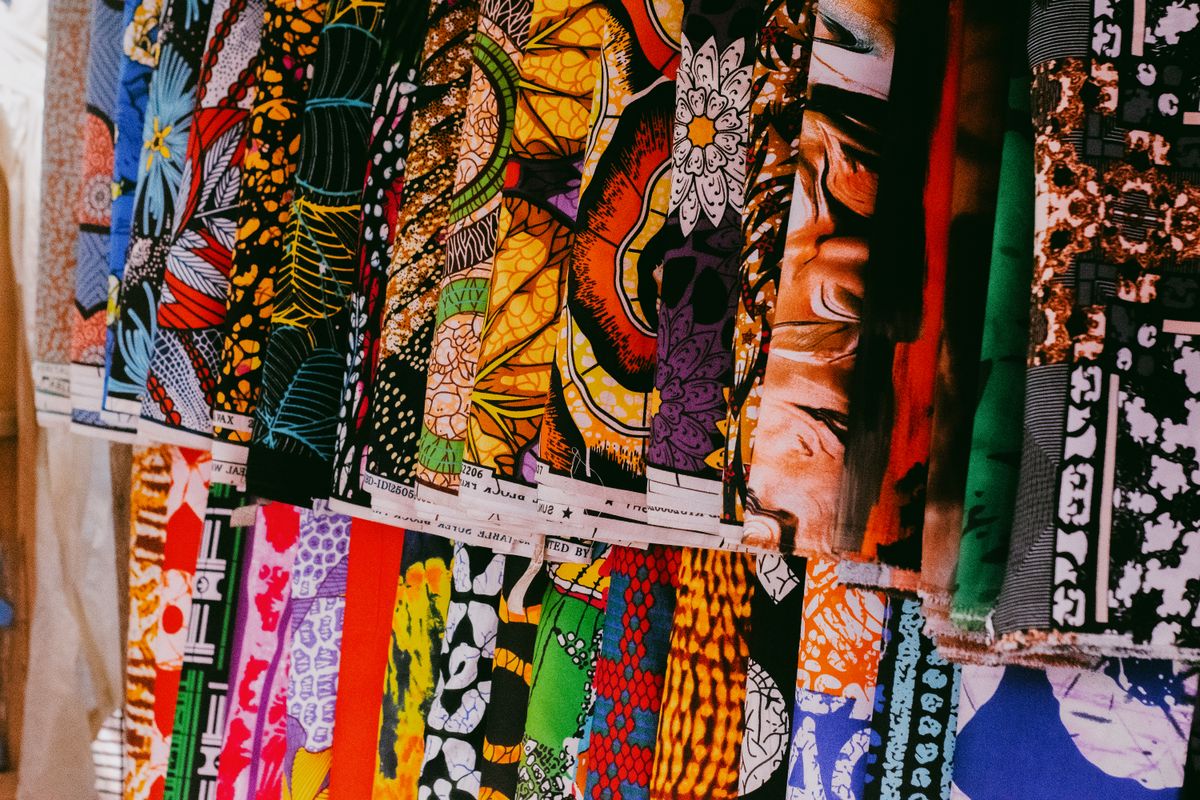
Diamniadio does not yet have a large fashion mall, but the offer is real and lively. You will find clothing and accessory shops, second hand stalls, fabric sellers with bazin, wax and getzner, and neighbourhood tailors, still the best value for money anywhere in Senegal.
Useful markers:
- Tailoring a simple outfit: often 5,000 to 15,000 FCFA for the work, fabric not included.
- A metre of standard wax: from around 2,000 FCFA, far more for rich bazin.
- Braiding or styling at a local salon: highly variable, from 3,000 to well over 20,000 FCFA.
Diaspora tip: if you are having outfits made for an event, leave generous margin. A neighbourhood tailor juggles several orders at once and deadlines slip easily in festival season.
Hardware, DIY and home equipment
This is arguably Diamniadio's retail strength. A town being built needs cement, steel, paint, plumbing, switches and locks, so hardware stores are numerous and well stocked, and furniture showrooms take advantage of the available floor space.
If you are moving in, a sensible order is:
- Sort out locks and basic electrics first.
- Buy the bulky items, mattresses, wardrobes, appliances, at a showroom and negotiate delivery.
- Keep small purchases for the nearest hardware shop, which will rescue you on a Sunday.
Common mistake: buying every small item in Dakar to "do it in one trip". Between fuel, time and hauling loads, the price gap disappears fast.
What is still missing
Honestly, Diamniadio is a new town and retail shows it. There are still too few late-opening pharmacies in some residential poles, few well-stocked bookshops and stationers, little dedicated children's clothing, and above all a thin fresh-food offer once you leave the N1 corridor. Opening hours are shorter than in Dakar: after dark, in the newer zones, many shutters are down. Plan evening purchases ahead, carry small change, and do not assume everything can be paid by mobile money.
Recommended addresses on SeneFinder
- DMC Showroom Diamniadio : Diamniadio, showroom.
- Boutique Niébé : Diamniadio, shop.
- DADA SHOP : Diamniadio, shop.
- Quincaillerie Kébé& Frères : Diamniadio, hardware store.
- Quincaillerie : Diamniadio, hardware store.
- Quincaillerie Général Bah & frère : Diamniadio, hardware store.
To go further, see all addresses in this category or explore the Diamniadio directory.
Useful tools
- Plan your route between Diamniadio, Rufisque and Dakar.
- Convert your currency into FCFA before negotiating a big purchase.
- Check the practical guide for emergency numbers (17, 18, 1515) and transport information.
- Running a shop in Diamniadio? List your business.
- Also worth reading: the complete Diamniadio guide and where to stay in Diamniadio.
Frequently asked questions
Can you find everything in Diamniadio without going to Dakar?
For daily life, yes: food, hardware, furniture, tailoring and basic services are all available locally. For branded ready-to-wear, specialised electronics or certain imported goods, a trip to Dakar or Rufisque is often still needed.
What should a family budget for groceries?
It depends heavily on household size and season, but vegetables for five people typically run 3,000 to 6,000 FCFA for two days. Prices climb noticeably in the weeks before major religious festivals.
Do shops accept mobile money?
Increasingly yes, especially established shops and showrooms. In small corner shops, always carry cash and small change, since the network or the agent's float can run short.