
Business Schools in Dakar: A Practical Guide
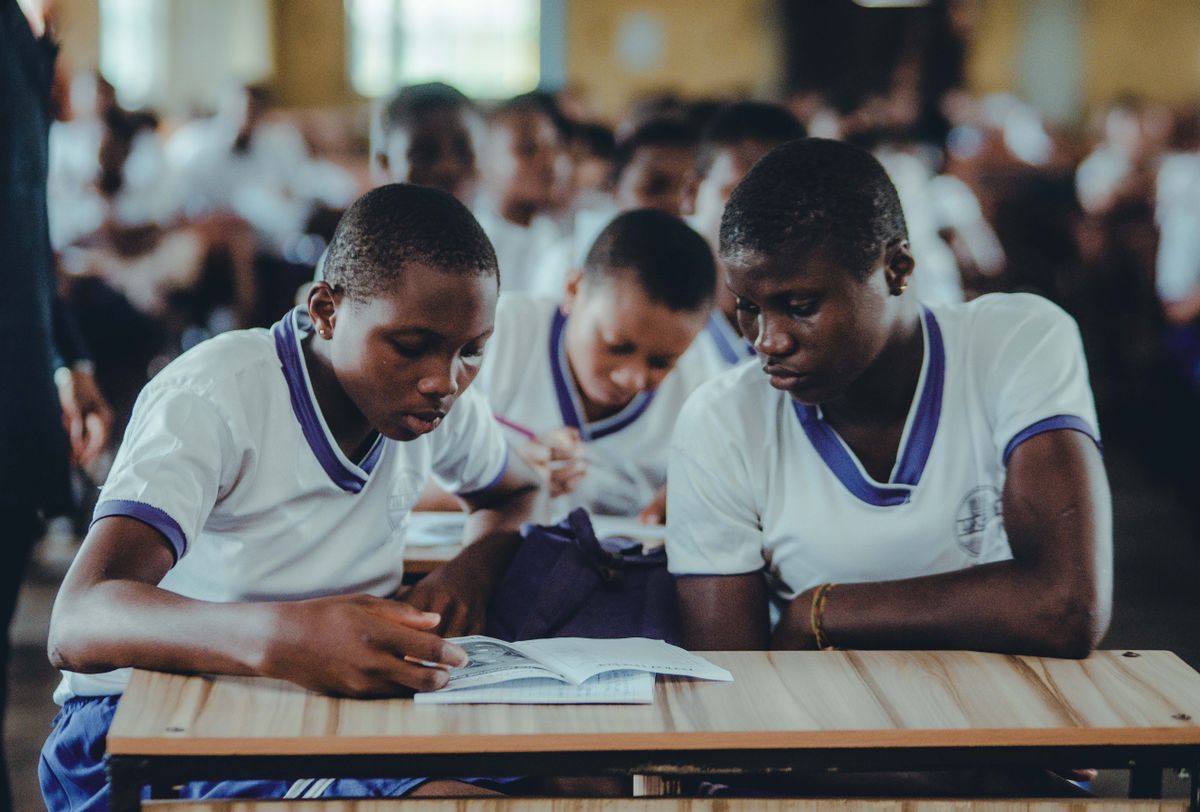
How to choose a business school in Dakar: bachelor's degrees, MBAs, work-study tracks, CAMES accreditation, budgets and neighborhoods. Concrete guidance for local families, newcomers and the diaspora.
Business Schools in Dakar: How to Choose Well
Dakar hosts most of Senegal's management and business programmes, from two-year technical diplomas to executive MBAs. The real question is not how many schools exist, but whether the degree holds value: ministry approval, CAMES recognition, genuine access to work-study placements, and the true cost over three to five years.
Approval and CAMES recognition
Two separate validations apply, and families often mix them up.
- Ministry of Higher Education approval allows an institution to legally teach in Senegal. Without it, nothing else counts.
- CAMES recognition applies to the programme itself and is valid across roughly fifteen African countries. It is what matters for public sector exams, for degree equivalence abroad, and for continuing to a doctorate.
- ANAQ-Sup accreditation assesses the programme's internal quality.
Ask to see the approval order and the list of recognised programmes, line by line. A school can be approved while some of its tracks are not recognised, so check that the exact name of your intended track appears on the document, not just the school's name.
Bachelor's, master's, MBA: what each level is for
Senegal follows the LMD system (licence, master, doctorat), which makes transfers and equivalences easier.
- The three-year licence in management, marketing, finance, international trade or logistics is taken after the baccalauréat and leads to junior analyst, account officer or assistant roles.
- The two-year master's brings specialisation: audit, management control, banking and insurance, supply chain, entrepreneurship. For most management jobs, this is the degree employers actually look for.
- The MBA targets professionals with several years of experience. In Dakar the dominant format is the Executive MBA taught on Friday evenings and Saturdays. A school offering an MBA straight after a bachelor's degree should raise a flag.
If you are in the diaspora, the recurring worry is whether the degree will be readable abroad. CAMES recognition helps a great deal, but also ask whether formal dual-degree agreements exist rather than vague partnerships.
Work-study and internships: the real differentiator
With equal grades, experience decides who gets hired. Work-study is growing fast in Dakar, driven by banks, telecoms, audit firms, retail chains and NGOs.
- Check whether the school runs a corporate relations office that genuinely places students, or whether you are on your own.
- Ask about the rhythm: three days in the company and two on campus, or alternating weeks. It shapes your entire commute.
- An internship allowance is common, ranging from a few tens of thousands of FCFA to over one hundred thousand FCFA per month depending on the sector.
- A final-year internship with a defended dissertation is standard at both levels.
Neighborhoods, commuting and budget
Campuses cluster at the Plateau for older institutions, in Point E, Mermoz, Sacré-Cœur and Liberté 6 for many private schools, in the Almadies and Ouakam for newer ones, with Yoff and Ngor further north. The Diamniadio hub keeps expanding.
If you live in Parcelles Assainies, Pikine, Guédiawaye, Keur Massar or Rufisque, test the journey before enrolling. The BRT and the TER have helped along the Dakar to Rufisque corridor, but a poorly served campus can still cost two to three hours a day at peak times.
On budget, annual private tuition typically runs from roughly 500,000 to 1,500,000 FCFA for a bachelor's programme, and climbs well above that for an MBA. Add registration, materials, transport and sometimes accommodation, then ask about instalments, which most schools accept. Applications usually open in spring for an October intake, sometimes with a second one in January. Plan ahead: scholarship files and diploma equivalences take weeks. Never pay a full year upfront before visiting the premises while classes are running.
Recommended addresses on SeneFinder
- 3c : Foire, education provider.
- Middle School University Architecture De Dakar : Dakar, education provider.
- Notre Dame Du Cap-Vert : Pikine, education provider.
- UCAO ISAE-Thies : Thiès, higher education institution.
- UCAO ISG Saint Michel : Plateau, higher education institution.
- Université Catholique De L' Afrique De L' Ouest ( UCAO ) : Plateau, university.
To widen your shortlist, you can see all addresses in the education category in Dakar.
Useful tools
- Route planner : test the home to campus commute before you enrol.
- Currency converter : handy for comparing tuition fees from abroad.
- Practical guide : emergency numbers (17, 18, 1515) and transport basics.
- Also worth reading: the best schools in Dakar and how to start a business in Senegal.
Frequently asked questions
How do I check that a business school is CAMES recognised?
Ask for a copy of the ministry approval order and the list of recognised programmes, then confirm your exact track appears on it. Recognition applies to the programme, not simply to the institution.
Can I do an MBA in Dakar while working full time?
Yes. Most MBAs offered in Dakar use an executive format, with classes on Friday evenings and Saturdays or in intensive blocks, designed for professionals who are already employed.
Are work-study programmes common in Dakar business schools?
They are expanding, especially at master's level and in banking, audit, marketing and logistics. Ask whether the school actually places its students or leaves the search entirely to you.