
Plateau Dakar Neighborhood Guide
A practical guide to Plateau, the administrative and historic heart of Dakar: getting around, realistic FCFA budgets, seasons, safety and day-to-day tips for visitors, diaspora and newcomers.
Plateau Dakar Neighborhood Guide
Plateau is the historic and administrative core of Dakar. Ministries, the presidency, major banks, airlines, law firms and a large share of corporate headquarters are concentrated here. Its straight, grid-like street plan — a colonial-era legacy — makes it one of the very few parts of the city where walking from one place to another is genuinely practical.
Getting your bearings
Plateau sits on the southern tip of the Cap-Vert peninsula. To the north lies Médina, dense and working-class. To the east, the port and the ferry terminal for Gorée Island. To the west, the Corniche Ouest hugs the ocean and runs up toward Fann, Point E and Mermoz. Further out, Almadies, Ngor, Ouakam and Yoff form the city's residential and seaside belt — 20 to 45 minutes away depending on traffic.
Useful landmarks: Place de l'Indépendance and Avenue Léopold Sédar Senghor anchor the centre; Kermel market, a 19th-century covered hall, is a natural meeting point; Sandaga market and Avenue Lamine Guèye mark the transition into Médina.
Getting around
- On foot: you can cross Plateau in 20–30 minutes. During the day it is the most efficient option.
- Yellow-and-black taxis: agree the fare before getting in. Budget 1,000–2,000 FCFA within Plateau, 2,500–5,000 FCFA to Point E or Mermoz, and 5,000–10,000 FCFA to Almadies, Ngor or Yoff. Prices rise at night and in the rain.
- Ride-hailing apps: typically 20–30% cheaper than a negotiated taxi, with no haggling.
- Dakar Dem Dikk buses and cars rapides: 150–500 FCFA. Cheap, but slow and packed at rush hour.
- BRT: the express line links the centre to the northern suburbs and is a genuine time-saver on long trips.
- AIBD airport (Diass): 45–75 minutes from Plateau via the toll motorway. Taxi 15,000–25,000 FCFA; ride-hailing often less.
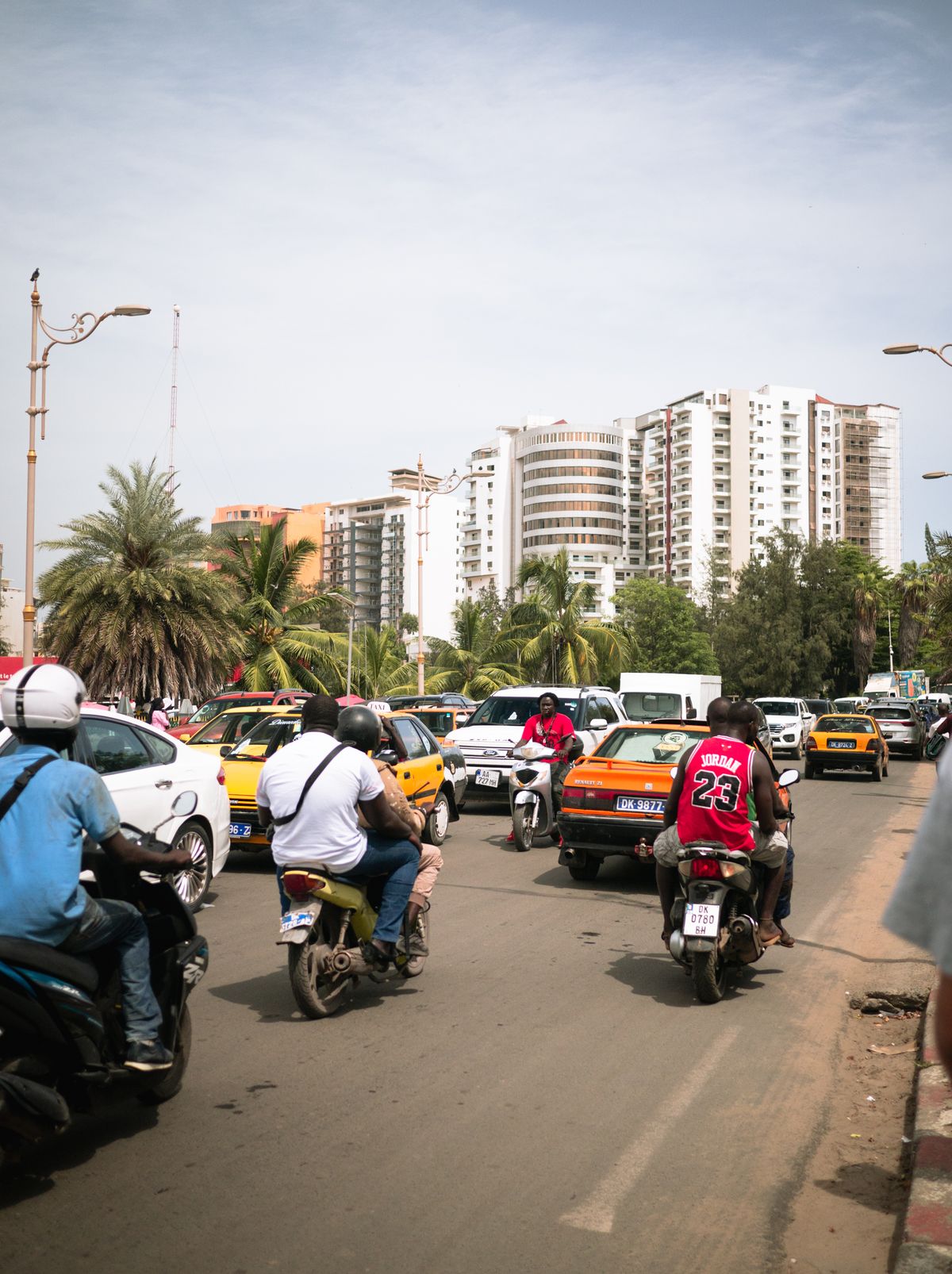
Traffic is Dakar's real hidden cost. Between 7:30–9:30 am and 5–8 pm, a Plateau–Almadies run can easily take twice as long.
Realistic budget
- Street breakfast (café Touba, bread and omelette): 500–1,500 FCFA
- Local lunch (thiéboudienne, yassa, mafé): 1,500–3,500 FCFA
- Upscale restaurant: 8,000–25,000 FCFA per person
- Mid-range hotel: 35,000–70,000 FCFA per night; business hotels 90,000–200,000 FCFA
- Short-term furnished rental: 25,000–60,000 FCFA per night
- Unfurnished long-term rental (one-bedroom): 250,000–600,000 FCFA per month in Plateau, usually with two to three months' deposit
- Gorée ferry: roughly 5,000–6,000 FCFA return for non-residents
Treat these as indicative — they move with the season and occupancy. The FCFA is pegged to the euro, which keeps conversions stable.
What to see and do
Ferries to Gorée Island leave from the Plateau terminal. Allow half a day and go early to beat the heat. The Museum of Black Civilisations, the cathedral, the presidential palace and the Art Deco facades along Avenue Senghor are all walkable. Kermel market is the best stop for fruit, fish and flowers; Sandaga and its surrounding streets for fabric, electronics and informal money changing — keep a close eye on your belongings there.
After dark, the energy shifts to Almadies and Ngor, where the beachside bars, clubs and restaurants are. Plateau itself empties out after 8 pm on weekdays.
Seasons and climate
- November to May: dry season, steady trade winds, 22–30 °C. The best window.
- July to October: the rainy season, or hivernage. Humid heat, 27–33 °C, short but intense downpours. Some downtown streets flood within minutes.
- February to April: Saharan dust episodes that cut visibility.
- Ramadan and the Magal of Touba: the city's rhythm shifts, with altered hours for shops and government offices. Plan ahead.
Practical tips
- Money: ATMs are plentiful in Plateau, but always carry cash in small notes — many businesses don't take cards. Mobile money is widely used.
- Safety: the area is safe by day. At night, don't flash phones or jewellery, especially around Sandaga or on empty stretches of the Corniche.
- Language: French will get you everywhere, but a few words of Wolof (nangadef, jërëjëf) noticeably change how you're received.
- Entry formalities: many nationalities enter visa-free for short stays — check before you travel. A yellow fever certificate may be required depending on where you're arriving from.
- Electricity: 230 V, type C/E plugs, same as France.
To find local providers, agencies, accommodation and services, browse the SeneFinder directory by travel and tourism category or straight through the Dakar city listings.
Is Plateau right for you?
If you're coming for business, for paperwork at government offices, or for a short heritage-focused trip, Plateau is the best base in the city. If you want beaches, quiet and nightlife, aim for Ngor, Almadies or Ouakam instead and treat Plateau as a daytime destination. For a longer stay balancing price, schools and amenities, Point E and Mermoz remain the dependable middle ground.