
Hotels on the Langue de Barbarie, Saint-Louis
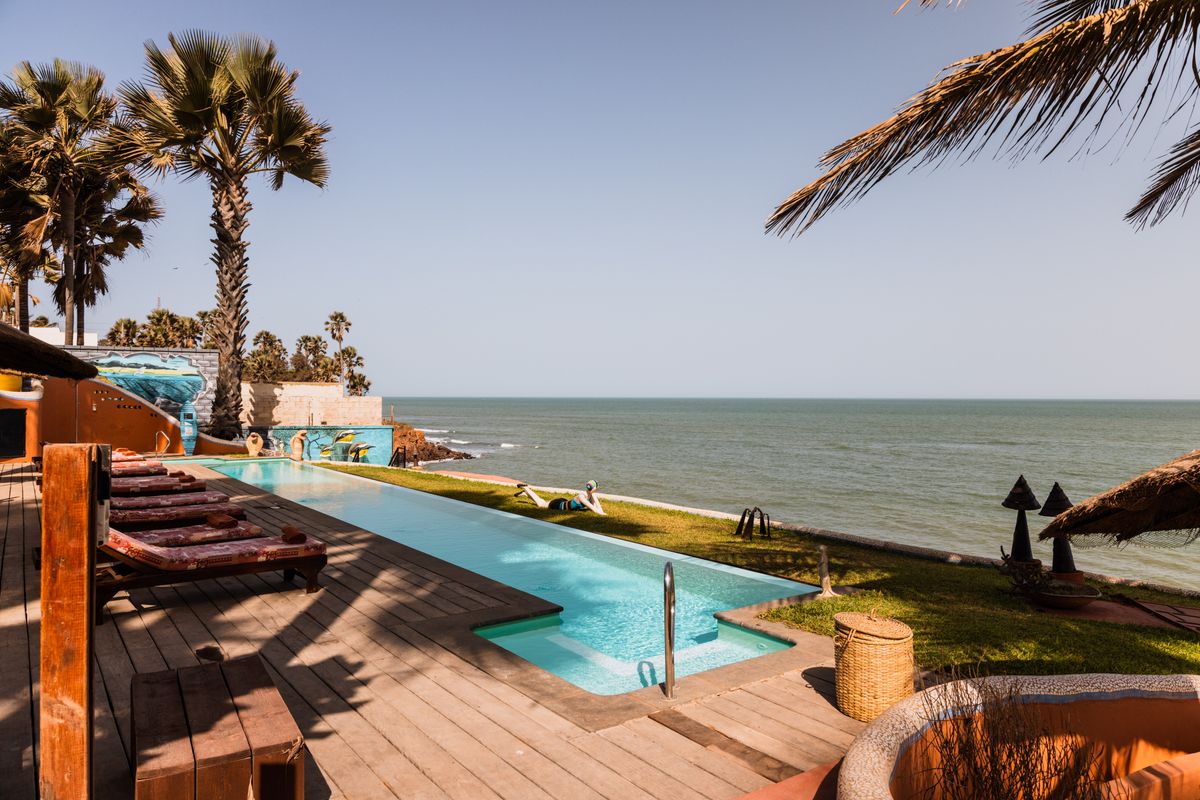
Staying on the Langue de Barbarie in Saint-Louis, around the Hydrobase: open beach, quiet nights, river birdlife and the old town a short taxi ride away. Bearings, budgets, seasons and addresses.
Hotels on the Langue de Barbarie, Saint-Louis
The Langue de Barbarie is the thin sand spit that separates the Senegal River from the Atlantic, right opposite the island of Saint-Louis. Almost every hotel on the spit sits in the Hydrobase area, directly on the beach and only a short taxi ride from the historic centre. It is the right base if you want quiet nights, open sand and birdlife rather than city noise.
Where the Langue de Barbarie actually is
The sand spit begins at the fishing district of Guet Ndar, continues through Ndar Toute and the Hydrobase, then stretches south towards the Langue de Barbarie National Park. Accommodation is concentrated in the Hydrobase section, named after the old Aeropostale seaplane base, where the beach runs wide and uninterrupted.
Three areas are worth keeping in mind:
- The island of Saint-Louis: the listed historic centre, restaurants and Place Faidherbe.
- Sor: the mainland side, with the road station, the markets and most everyday services.
- The Langue de Barbarie: Guet Ndar, Ndar Toute, the Hydrobase and then wild beach to the south.
A bridge links the spit straight to the island, so crossing takes minutes rather than a serious journey.
Quiet, beach and birds
Staying on the spit means accepting a little distance from town. In the evening there is no traffic and no market noise: you hear the ocean on one side and the river on the other. Families like the gardens, couples like the calm.
For nature, the location is hard to beat:
- Birdwatching: November to March is the strongest window, when European migrants arrive. Pelicans, flamingos, terns and herons are visible from the riverbank, best seen early in the morning.
- Langue de Barbarie National Park: to the south, reached by road then pirogue, usually a half day trip.
- Djoudj: the large bird sanctuary lies north towards Ross Bethio and works well as a full day excursion.
- Swimming: the Atlantic here is beautiful but currents can be strong, so do not swim alone.
Getting there and moving around by taxi
Most visitors arrive by road. From Dakar, shared seven seater cars and minibuses leave from the road stations, notably Baux Maraichers in Pikine, and reach Saint-Louis in roughly four to five hours depending on traffic around Guediawaye and Rufisque. A seat typically costs 5 000 to 9 000 FCFA. Hiring a car with driver is often negotiated between 35 000 and 70 000 FCFA per day, fuel by agreement.
Once you are in Saint-Louis:
- City taxis cover the whole town. A ride between the Hydrobase and the island usually costs 1 000 to 2 500 FCFA depending on the hour.
- Agree the fare before getting in: there are no meters, and polite negotiation is normal.
- Late in the evening taxis thin out, so ask reception to call one for you.
- Coming from Diass international airport, plan a private transfer or a stop in Dakar first, since the drive is long.
Budgets and seasons
Rates depend on comfort and timing. As a rough guide, a simple double room in a guesthouse often falls between 20 000 and 35 000 FCFA per night, a mid range property with a pool between 40 000 and 80 000 FCFA, and roomier beachfront options above that.
- November to February: the most comfortable months, cool nights, clear skies and plenty of birds.
- March to June: hot and dry, with the town very lively in spring around the jazz festival. Book early.
- July to October: rainy season, humid heat, softer rates and very quiet beaches.
Two practical habits: ask whether a transfer from the road station is offered, and carry some cash, as ATMs are mostly on the island and in Sor.
Recommended addresses on SeneFinder
- EDEN BEACH SAINT-LOUIS : Langue de Barbarie
- Hotel Cap : Langue de Barbarie
- Hôtel La Saint-Louisienne Langue de Barbarie : Langue de Barbarie
- Hôtel Oasis Saint-Louis : Langue de Barbarie
To widen your shortlist, you can see all addresses for stays in Saint-Louis.
Useful tools
- Plan your itinerary between Dakar, Saint-Louis and the north of the country.
- FCFA currency converter to size up your budget before you travel.
- Practical guide: emergency numbers 17, 18 and 1515, transport and daily tips.
- Read next: the best hotels in Saint-Louis and hotels in Mbour if you continue down the coast.
Frequently asked questions
Do I need a car to stay on the Langue de Barbarie?
No. City taxis connect the spit with the island and Sor throughout the day at low cost. A car only becomes useful if you plan to explore Djoudj or the national park on your own schedule.
Is the beach at the Hydrobase safe for swimming?
It can be, with care: the ocean is fully open and currents vary from day to day. Ask your hotel for local advice and avoid swimming alone.
When is the best time to see birds?
Between November and March, during the migration season. Early morning pirogue trips on the river give the best sightings.