
Where to eat thieboudienne in Dakar: a guide
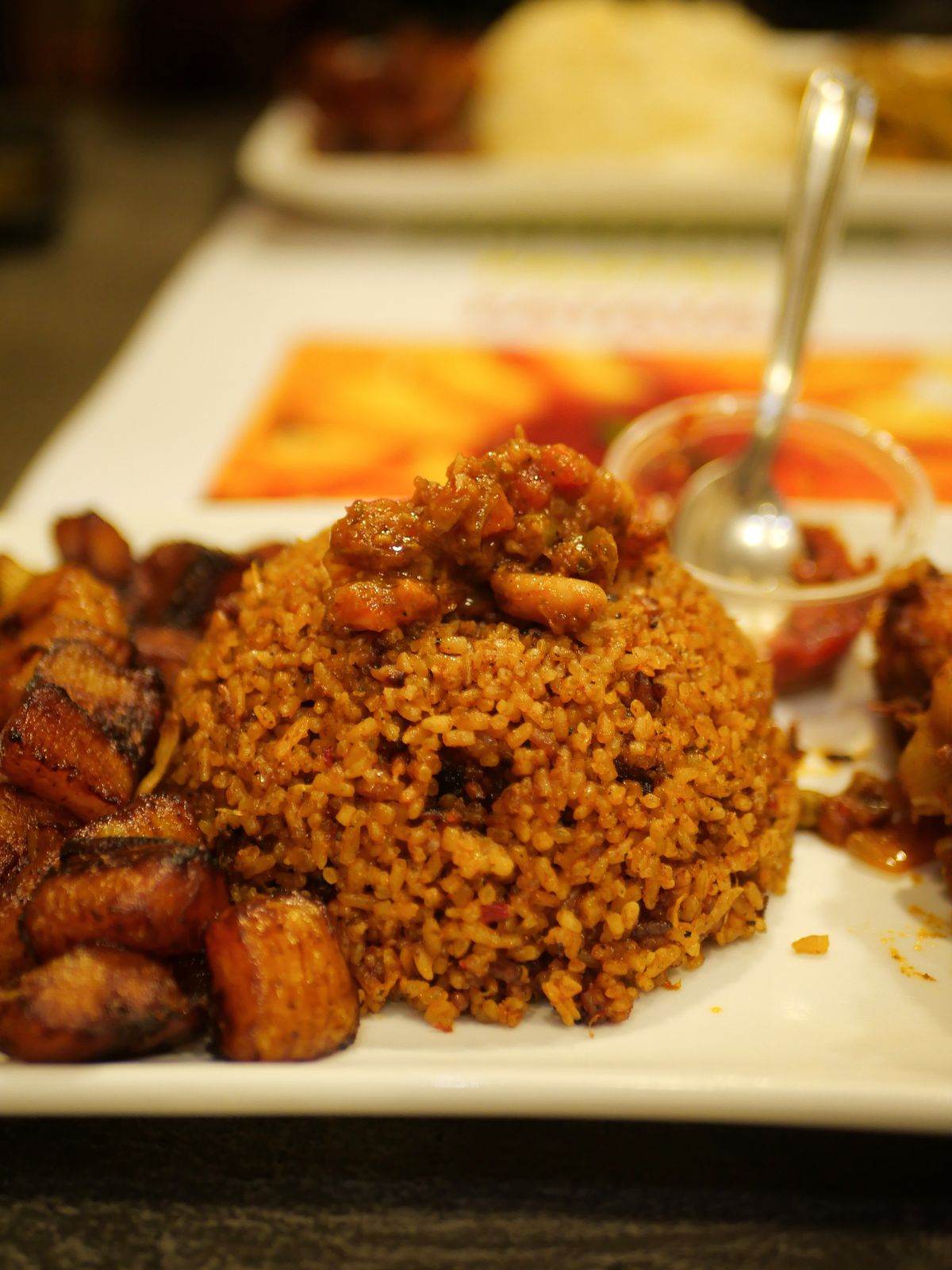
Thieboudienne, Senegal's national dish, is eaten everywhere in Dakar. Our tips to find the best fish and rice, neighborhood by neighborhood, with prices in FCFA.
Where to eat thieboudienne in Dakar
Thieboudienne — fish and rice in Wolof — is Senegal's national dish. Inscribed on UNESCO's intangible heritage list, it comes in a red (tomato) or white version, with fish stuffed with herb paste, simmered vegetables (cassava, cabbage, carrot, bitter eggplant) and the famous crispy rice from the bottom of the pot, the xoon. In Dakar, knowing where to eat thieboudienne is as much about the neighborhood as the hour.
The right time: lunch
In Senegal, thieboudienne is a midday dish. It is freshest around 1-2pm, cooked that same morning. In the evening people switch to dibi (grills) or yassa. So for the authentic experience, aim for lunch, when the kitchens are running at full tilt.
In the popular gargotes
The best plates do not always come from smart restaurants. In the gargotes of Plateau, around Sandaga or the Kermel market, you often eat the most generous and authentic thieboudienne, sometimes served in a large shared dish. Expect 1,000 to 2,500 FCFA a plate. This is where the heart and taste of Dakar beat.
Along the Corniche and in Almadies
If you prefer a table with a view, the Corniche and Almadies line up restaurants where thieboudienne is refined with premium fish and careful plating. The price then rises to 4,000-8,000 FCFA, but you gain the setting and comfort. A good compromise for a first taste of Senegalese cuisine.
In Medina and working-class neighborhoods
Medina, a historic and popular district, remains a safe bet for a family-style thieboudienne, often cooked the old way over a wood fire. The mood is warm and portions are hearty. Same at Gueule Tapee or Grand-Yoff.
How to spot a good thieboudienne
- The rice: well colored, not sticky, fragrant, with a crispy xoon at the bottom.
- The fish: fresh, stuffed with parsley and garlic (the rille), firm flesh.
- The vegetables: tender but whole, never mushy.
- The nététou: this fermented néré seed that gives the dish its depth.
Ask to taste the jaay, the small spicy side, and pair with a bissap (hibiscus) or bouye (baobab) juice.
Finding your spot
Browse the restaurants in Dakar in our directory, filter on the city of Dakar and look for those serving Senegalese cuisine. And if you want to stay near the good tables, check out the hotels too.
In short
In Dakar, thieboudienne is eaten everywhere, from the shared gargote dish to the refined plate facing the ocean. Aim for lunch, follow the freshness of the fish, and let the smell of simmering rice guide you: it is often the city's best GPS.