
How to Open a Bank Account in Senegal
Required documents, account types, real FCFA costs and practical tips for opening a bank account in Senegal, whether you are a resident, an expat or part of the diaspora.
How to Open a Bank Account in Senegal: A Practical Guide
Opening a bank account in Senegal is straightforward but paperwork-heavy. Success comes down to two things: a complete document file and picking the right branch. Here is what to know before you go.
Choosing the right account
- Current account (compte chèque) — the default for salaries, transfers and a debit card. This is what most branches will offer you first.
- Savings account (compte d'épargne) — interest-bearing, typically around 3–3.5% gross thanks to the BCEAO's regulated floor rate, with tighter withdrawal rules. Good for a property or school-fees goal.
- Foreign-currency account — possible but requires authorisation and is generally limited to non-residents, people paid in euros or dollars, and companies. Do not assume you will get one on request.
- Non-resident / diaspora account — several banks run dedicated offers, and some can be opened from France or Italy through their European subsidiary. Usually the fastest route if you live abroad.
The CFA franc (XOF) is pegged to the euro at a fixed rate (€1 = 655.957 FCFA), so there is no exchange-rate risk against the eurozone — a genuine advantage for the European diaspora.
Documents to prepare
The list barely varies between banks:
- ID — Senegalese national ID card or a valid passport, plus a residence permit (carte de séjour) or long-stay visa if you are foreign.
- Proof of address — a Senelec (electricity) or SDE (water) bill less than three months old. If you are staying with someone or renting informally, ask your local town hall (Plateau, Mermoz-Sacré-Cœur, Ngor, Ouakam, Yoff…) for a certificat de résidence; expect roughly 1,000–5,000 FCFA.
- Proof of income — employment contract, three recent payslips, or a business activity statement if you are self-employed.
- Passport photos — two to four, from any neighbourhood photo studio for 1,000–3,000 FCFA.
- NINEA and trade register if you are opening a business account.
Have your copies photocopied and certified (légalisées) at the town hall — a few hundred francs per page. Many branches still ask for it.
What it actually costs
Typical ranges in Dakar:
- Opening deposit — 5,000 to 25,000 FCFA depending on the bank, sometimes 50,000 FCFA or more on premium offers.
- Account maintenance fees — roughly 1,000 to 5,000 FCFA per month. This is the line item that surprises newcomers most.
- Debit card — a GIM-UEMOA regional card runs about 10,000–20,000 FCFA per year; an international Visa or Mastercard is more like 25,000–60,000 FCFA per year.
- Out-of-network ATM withdrawals — 500 to 1,500 FCFA per transaction. Stick to your own bank's ATMs.
- Chequebook — often 5,000–15,000 FCFA, issued only after the account has been active for a few weeks.
Always ask for the printed fee schedule (brochure tarifaire). Displaying it is mandatory, and reading it will save you real money.
Timing and where to go
Budget one to three weeks from filing your documents to receiving your account details (RIB), plus another two to four weeks for the card. Branches cluster in the Plateau (head offices and back-office staff, but long queues), the Almadies and Point E (expat and professional clientele, more English-speaking staff), and Mermoz and Ouakam for residential convenience.
A few habits that help:
- Arrive early, before 9:30 a.m. Avoid Friday afternoons (prayers) and month-end, when salary withdrawals swamp every branch.
- During Ramadan, opening hours shrink — add one to two weeks to your timeline. The same applies around Tabaski and Korité, when branches are packed.
- A referral from an existing customer often smooths the process, particularly at regional banks.
Mobile money is the essential companion
Almost everyone in Senegal uses a mobile wallet for daily life: taxis, shops, utility bills, transfers upcountry. Registration is instant with just an ID, limits are modest (commonly 200,000 to 2,000,000 FCFA depending on your verification tier), and transfer fees sit around 1–2%. Most banks now let you link your account to a mobile wallet — ask for it when you open the account rather than later.
To compare banks, exchange bureaux and financial services near you, browse the money and finance category or see what is available in Dakar.
Common mistakes to avoid
- Signing without reading the fee schedule. A lightly used account can quietly cost 30,000–60,000 FCFA a year in fixed charges.
- Ignoring branch coverage outside Dakar if you travel to Thiès, Saint-Louis or Casamance.
- Failing to formally close an old account. Fees keep accruing and can turn into a payment incident on your record.
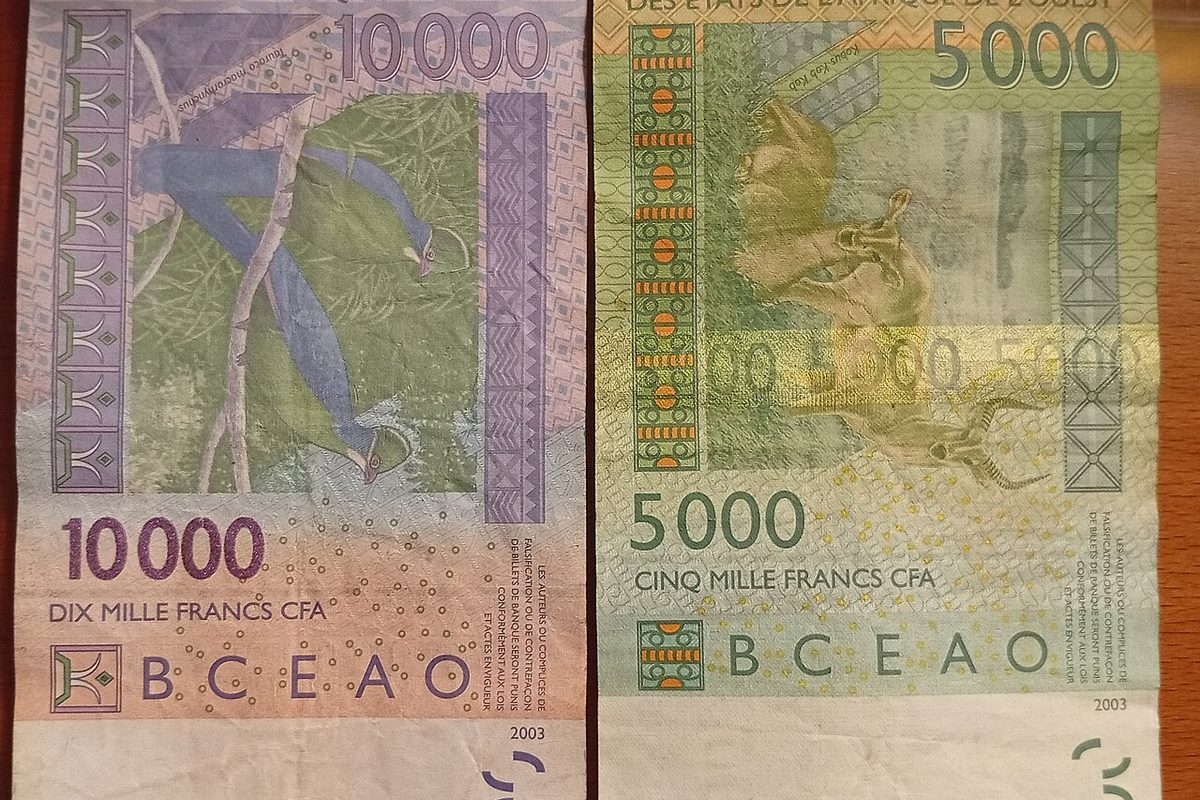
- Assuming you can pay by card everywhere. Many shops, markets and taxis are cash-only. Always carry small notes — breaking a 10,000 FCFA note can be a genuine problem.
With a complete file, a well-chosen branch and an early-morning visit, most people finish the whole process in a single trip.