
Moving to Dakar: A Diaspora Guide
Neighborhoods, rents in FCFA, paperwork, transport and seasons: a practical guide to moving to Dakar for members of the diaspora.
Moving to Dakar: A Diaspora Guide
Relocating to Dakar is exciting, but the city runs on its own logic. Here is what you actually need to know to arrive prepared, avoid expensive first-month mistakes, and settle in quickly.
Picking a neighborhood
Where you live shapes your budget, your commute and your daily rhythm.
- Plateau — the administrative and business core. Convenient if you work with ministries, banks or international organizations. Busy on weekdays, very quiet at weekends, with little greenery and tough parking.
- Point E and Mermoz — central residential districts popular with professionals and families. A good balance of accessibility, local shops, schools and restaurants.
- Almadies and Ngor — the western tip, greener and closer to the ocean, with a strong diaspora and expatriate presence. Upmarket, expensive, and cooled by an Atlantic breeze year-round.
- Ouakam and Yoff — more affordable, lively, with genuine neighborhood life, quick access to beaches and markets. Ouakam sits below the African Renaissance Monument; Yoff keeps its Lebou fishing-village identity.
Housing costs and utilities
Rents are negotiable and swing widely depending on furnishing, floor and distance from the sea. Typical monthly ranges:
- Studio or small one-bedroom in Ouakam, Yoff or outer Mermoz: 150,000 – 400,000 FCFA
- Unfurnished two-bedroom in Point E, Mermoz or Plateau: 350,000 – 700,000 FCFA
- Furnished upmarket apartment in Almadies or Ngor: 600,000 – 1,500,000 FCFA, more for a villa with a pool
Budget a deposit of two to three months' rent plus roughly one month as agency commission. Insist on a written lease and a signed inventory. For utilities, expect 30,000 – 80,000 FCFA a month for electricity, often 100,000 FCFA or more if you run air conditioning through the hot season; 10,000 – 25,000 FCFA for water; and 20,000 – 40,000 FCFA for fiber internet. A surge protector or small backup unit is still worth having when the power dips.
Paperwork
If you hold Senegalese nationality, renew your passport and biometric national ID card at your consulate before departure — processing on arrival can be slow. ECOWAS nationals move freely; other nationalities must regularize their stay with the immigration authorities within three months of arrival.
To open a bank account, bring ID, proof of address or a hosting attestation, and proof of income. Mobile money is essential for paying a taxi, settling a bill or sending money upcountry, so activate a wallet as soon as you buy a local SIM card.
Getting around
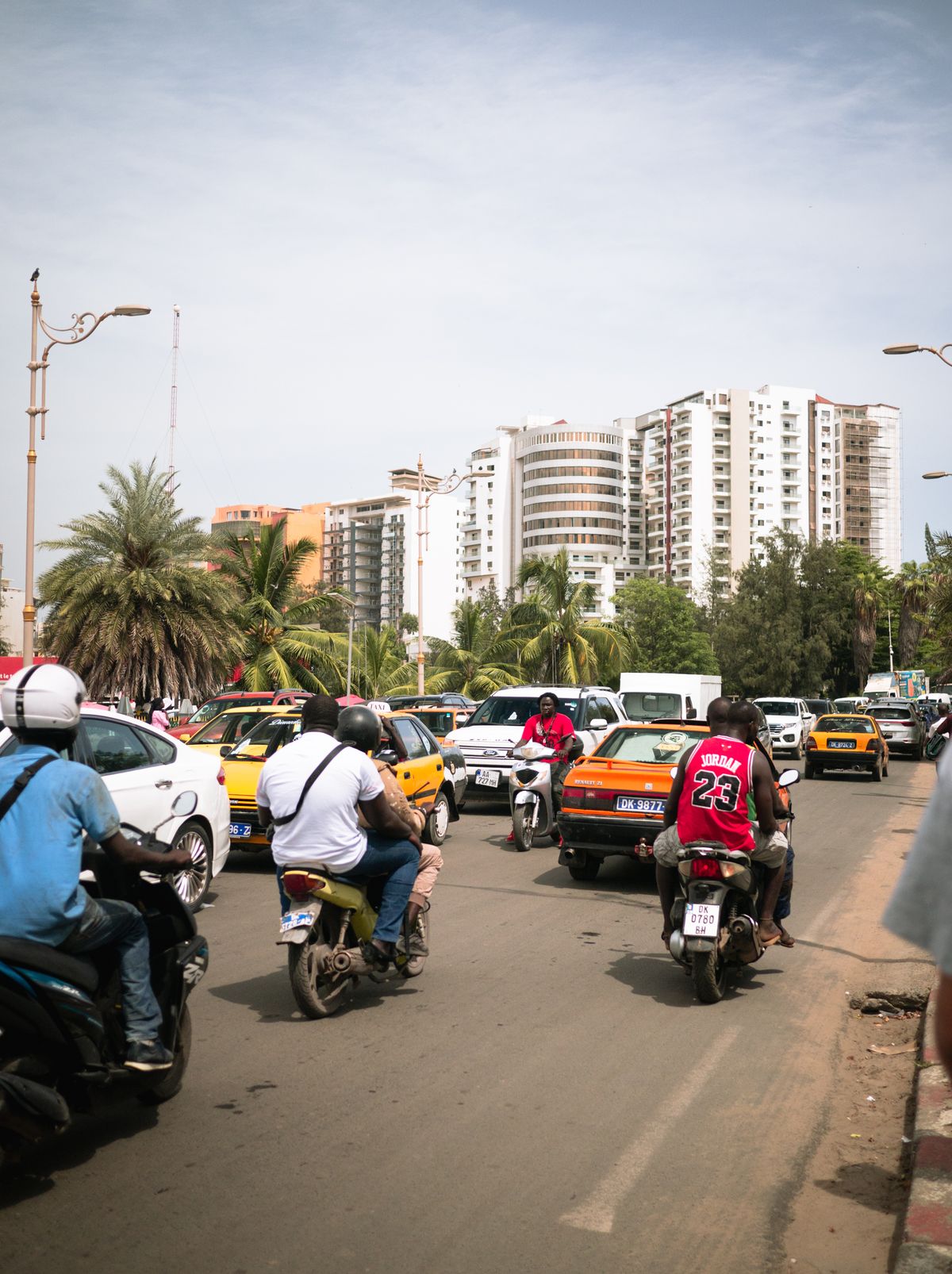
Dakar sits on a narrow peninsula, so traffic funnels onto a handful of arteries and rush hour is dense. A taxi from Plateau to Almadies usually runs 3,000 – 5,000 FCFA, agreed before you get in unless you use a ride-hailing app. The regional express train toward Diamniadio and the dedicated-lane rapid bus have transformed suburban commutes, with fares from a few hundred up to about 1,500 FCFA. A reliable used car costs 3,000,000 – 8,000,000 FCFA; import duties often make buying locally the simpler path.
Seasons and the calendar
From November to May the weather is dry and pleasant, with genuinely cool January nights. The rainy season, roughly July to October, brings humid heat, thunderstorms and flooding in low-lying suburban areas — check how a property drains before you sign. Tabaski, the Magal, the Gamou and the summer holidays push airfares up and slow administrative offices down. Book early if you travel in July, August or December.
Daily life and settling in
Imported goods are costly; shopping at your neighborhood market cuts the bill dramatically. Full-time household help typically earns 75,000 – 150,000 FCFA a month and should be properly declared. A private clinic consultation costs 15,000 – 40,000 FCFA; take out health cover that includes medical evacuation. International schools charge 2,000,000 – 6,000,000 FCFA a year and fill their places months ahead.
Learn a few phrases of Wolof — greetings open every door here, and cutting one short reads as rude. Teranga is not a marketing slogan but a way of relating: take the time to greet people properly, to visit, to accept the tea. Friday afternoons empty out for prayers, and many families gather for a shared lunch bowl, so plan meetings around it.
To find providers, stays and services near you, browse the Dakar business directory or the travel and tourism category.