
Travelling by bus in Senegal: a practical guide
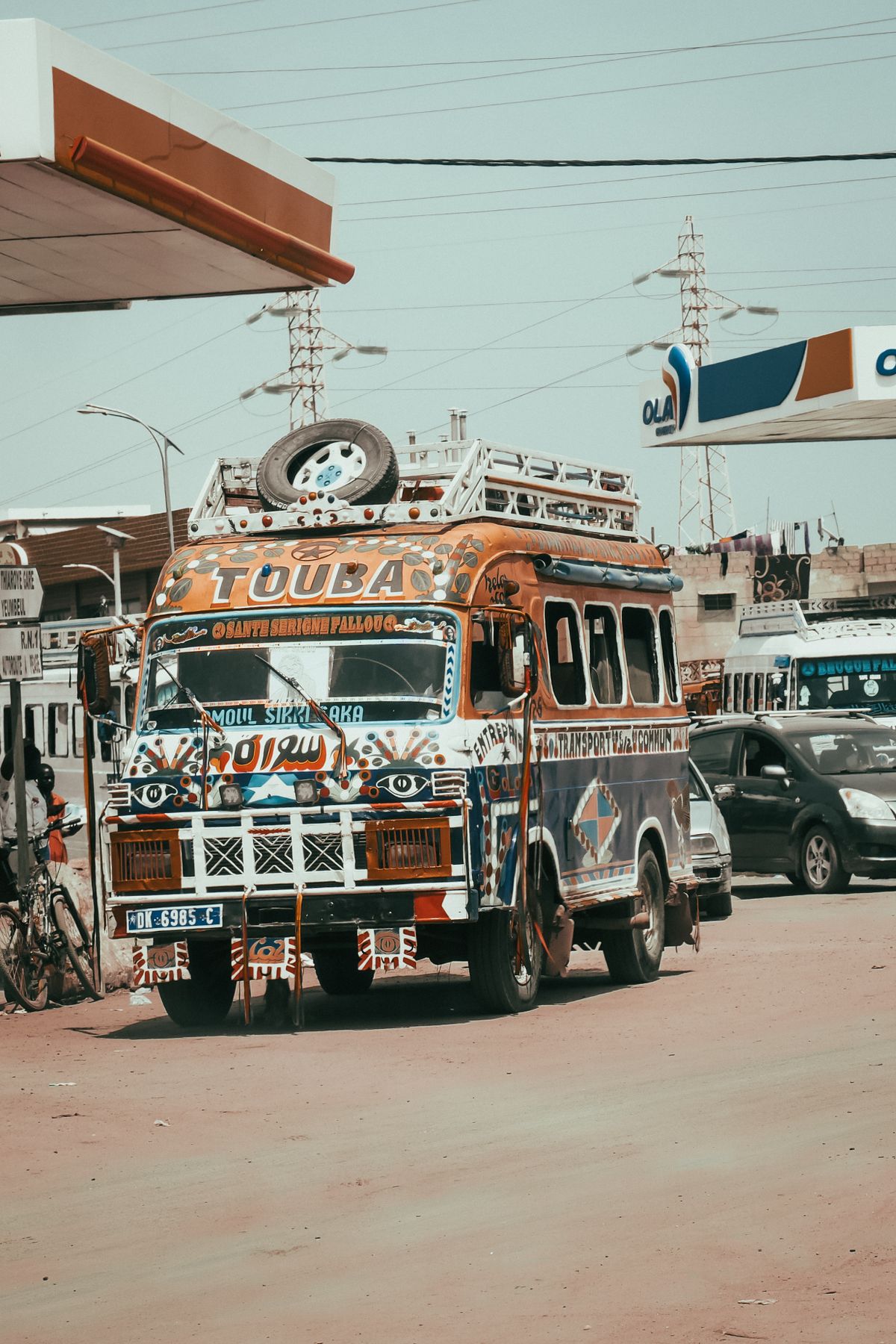
Companies, bus stations, booking, luggage and comfort: how to travel by bus between Dakar, Thiès, Saint-Louis, Touba, Tambacounda or Ziguinchor.
Travelling by bus in Senegal: what to know
The bus remains one of the simplest ways to connect Dakar with the country's major towns, Thiès, Saint-Louis, Touba, Tambacounda or Ziguinchor. More comfortable than the shared sept-places taxi on long trips, it still requires a bit of planning.
The main stations and companies
The Beaux Maraîchers bus station, in Pikine, handles a large share of departures towards the interior, with several companies operating from the same site. Other operators run their own agencies in Dakar or in the regions, handy for buying a ticket ahead of time without going through the main station. Before choosing, simply compare the departure times on offer and the exact destination served, since some companies only cover certain routes.
Booking your seat
On the busiest routes, especially towards Touba during major religious gatherings or towards Saint-Louis during peak periods, booking ahead avoids ending up without a ticket on departure day. Agencies often let you book directly at the counter a few days before travelling, which is worth doing if your trip falls on a weekend or a public holiday, when demand for seats rises noticeably. Arriving early on the day itself is still essential, since loading luggage and filling the bus takes time before the announced departure.
Luggage and comfort on board
Checked luggage is generally accepted up to a reasonable weight allowance, beyond which a surcharge may apply. Keep valuables and important documents with you in the cabin rather than in the hold. The bus offers more legroom than a sept-places and lets you stand up during stops, a real comfort on multi-hour trips to Tambacounda or Ziguinchor. Still bring water and a snack, since stops are not always frequent.
Bus, sept-places or the TER: how to choose
A sept-places usually leaves faster, as soon as all seats are filled, but offers less space and comfort on a long trip. The bus suits travellers who prefer a fixed schedule and more room on board, at the cost of a sometimes longer wait before departure. The TER, meanwhile, only runs along the Dakar-Diamniadio-AIBD line, so it does not replace the bus for reaching Thiès, Saint-Louis or more distant regions.
Leaving early, a useful habit
Leaving in the morning remains the most comfortable choice on long trips, avoiding the strongest afternoon heat and arriving before nightfall. It is also when traffic around Dakar and Rufisque tends to flow best, which shortens the overall journey. Checking the forecast before a long trip during the rainy season also helps, since some secondary roads towards the interior can slow down after heavy rain, stretching the announced travel time.
Recommended addresses on SeneFinder
The Dakar transport directory lists several stations and companies to help plan your trip.
- AIBD Dem Dikk : Dakar
- BEAUX MARAICHERS GARE ROUTIÈRE DE DAKAR : Pikine
- Dakar Dem Dikk(DDD): agence Thiès : Thiès
- Salam Transport : VDN
- Saou Transport Dakar : Dakar
- Senecar Tours : Dakar
To compare more options, see all addresses in this category or explore the Dakar directory.
Useful tools
- Plan your route
- Convert your travel budget to FCFA
- Useful numbers and transport info
- Also read: guide to the Beaux Maraîchers bus station and travelling from Dakar to Saint-Louis
Frequently asked questions
Should I book my bus seat in advance?
It is advisable on busy routes or during peak periods, for example towards Touba or Saint-Louis, to avoid ending up without a ticket.
What is the difference between the bus and the sept-places?
A sept-places leaves faster once full but offers less space, while the bus offers more comfort with a generally fixed schedule.
Can the TER replace the bus for travelling to the regions?
No, the TER only runs along the Dakar-Diamniadio-AIBD line; for Thiès, Saint-Louis or more distant regions, the bus or the sept-places remain necessary.