
Where to Eat Mafé in Dakar: A Local Guide
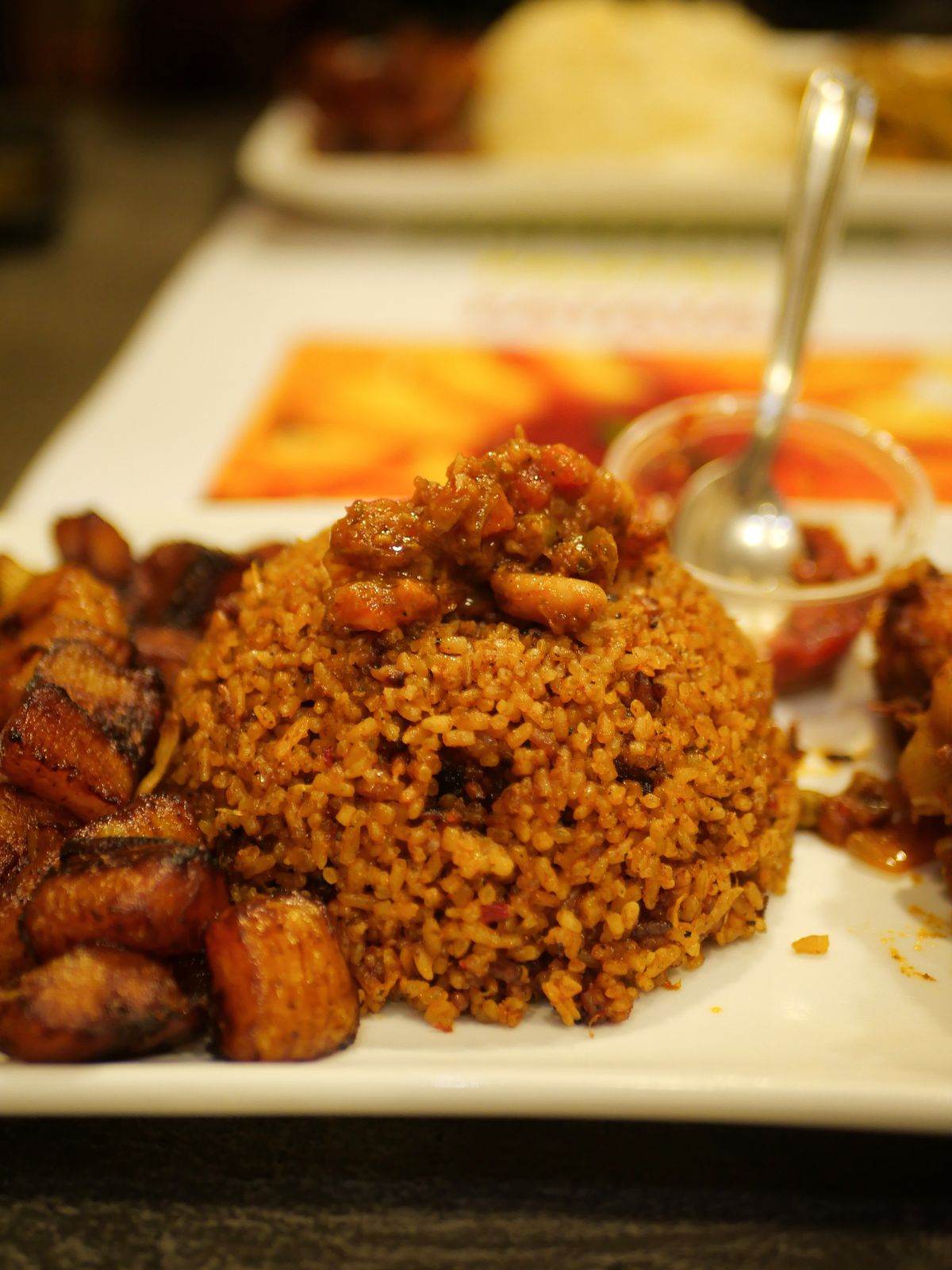
Creamy peanut sauce, beef or chicken mafé, neighbourhood canteens and sit-down restaurants: here is how to find a good mafé in Dakar, area by area, with practical tips and pitfalls to avoid.
Where to Eat Mafé in Dakar
Mafé is the thick, faintly sweet peanut sauce that Senegal spoons over white rice, with beef that falls apart on the fork or tender chicken. In Dakar you will find it everywhere, from small neighbourhood canteens that open at noon to sit-down restaurants in Almadies or the Plateau. The real question is not where it exists, but how to spot a good one.
How to recognise good mafé before you taste it
The sauce should be smooth and properly bound, a deep orange-brown, with a thin film of peanut oil on the surface: the sign of a long simmer. A grey, watery or grainy sauce means rushed cooking.
A few simple signals:
- The smell: roasted peanut should lead, not tomato paste.
- The meat: a bone-in cut such as shank or short rib carries far more flavour than lean cubes.
- The vegetables: cassava, sweet potato, carrot, cabbage. Their presence means the kitchen follows the full recipe.
- The room at noon: a busy place is almost always a good sign. Mafé is cooked in one large batch in the morning and tastes best when the pot turns over quickly.
Beef or chicken mafé: which to order
Beef mafé is the classic. The meat simmers for a long time in the sauce, soaking it up and giving the dish a depth chicken never quite reaches. Ask for a piece with a little bone if you want the fullest flavour.
Chicken mafé is lighter, usually quicker out of the kitchen, and it tends to win over children and first-timers. If this is your first mafé, start here.
You will also come across lamb mafé now and then, and meat-free versions where cassava and sweet potato take centre stage. If you have a dietary restriction, mention it when you order rather than at the last minute, since many kitchens can adapt but need a little notice.
Neighbourhood by neighbourhood
- Plateau: offices and government buildings. At lunchtime, small kitchens serve a dish of the day that follows the Senegalese rhythm, with mafé often mid-week. Arrive shortly after noon or it will be gone.
- Point E and Fann: students, clinics and offices. A good balance between fair prices and somewhere you can actually sit down.
- Mermoz, Sacré-Cœur, Liberté 6: the heart of Dakar family life, where neighbourhood canteens offer the best value and cooking closest to what is made at home.
- Almadies, Ngor, Ouakam, Yoff: closer to the ocean and more used to visitors. Expect mafé in a more polished setting, sometimes as part of a set menu.
- Parcelles Assainies, Pikine, Guédiawaye, Keur Massar: the densest districts, often the most generous portions, and the place where mafé is most commonly sold to take away.
- Rufisque and Diamniadio: handy if you work along that corridor. Places on the main roads often serve later into the afternoon.
Budget, timing and practical habits
Mafé is a lunch dish. It is cooked in the morning and served from around half past twelve until the pot is empty, frequently before three in the afternoon. In the evening many places switch to grilled meat, so do not count on it after dark.
As a rough guide to prices:
- A plate at a small neighbourhood canteen: roughly one to two thousand FCFA.
- A dish at a local restaurant with a dining room: between two and four thousand FCFA.
- A more established table with service and a drink: above five thousand FCFA.
A few habits worth picking up:
- Carry cash: many small kitchens accept neither cards nor mobile payment.
- Ask for extra sauce: it is almost always possible, and the sauce is the whole point.
- Go slow on the chilli, usually served on the side. Taste first.
- A peanut allergy means avoiding the dish entirely. Peanut is the base of the sauce and cannot be removed. For a medical emergency, 1515 and 18 are the numbers to know.
- During the rainy season, roughly July to October, traffic across Dakar slows considerably. Pick somewhere near where you already are.
Recommended addresses on SeneFinder
- Ge'eza : Point E
- Le Thiof : Dakar
- Maison B : Ngor
- Restaurant BUUMY Dakar : Point E
To widen your options by neighbourhood and budget, you can see all addresses.
Useful tools
- Route planner: plan lunch without losing an hour in traffic.
- Currency converter: useful if you still think in euros or dollars.
- Practical guide: emergency numbers, transport and everyday information in Dakar.
- In the same spirit: where to eat thieboudienne in Dakar and going out at night in Dakar.
Frequently asked questions
Is mafé served all day in Dakar?
Rarely. It is a lunch dish, cooked in the morning and served until the pot runs out, often by early afternoon. Most kitchens move on to other dishes in the evening.
What is the difference between mafé and thieboudienne?
Mafé is a peanut sauce served over plain white rice with beef or chicken and vegetables. Thieboudienne is rice cooked directly in a tomato-based sauce with fish. They are two very different dishes.
Can you eat mafé without meat?
Yes, some kitchens prepare a vegetable version. Mafé without peanut, however, does not exist: peanut is the foundation of the sauce.